The future of QA: find the bug, then ship the fix
QA engineers will always own quality. What changes is how much of the fix they can deliver themselves.
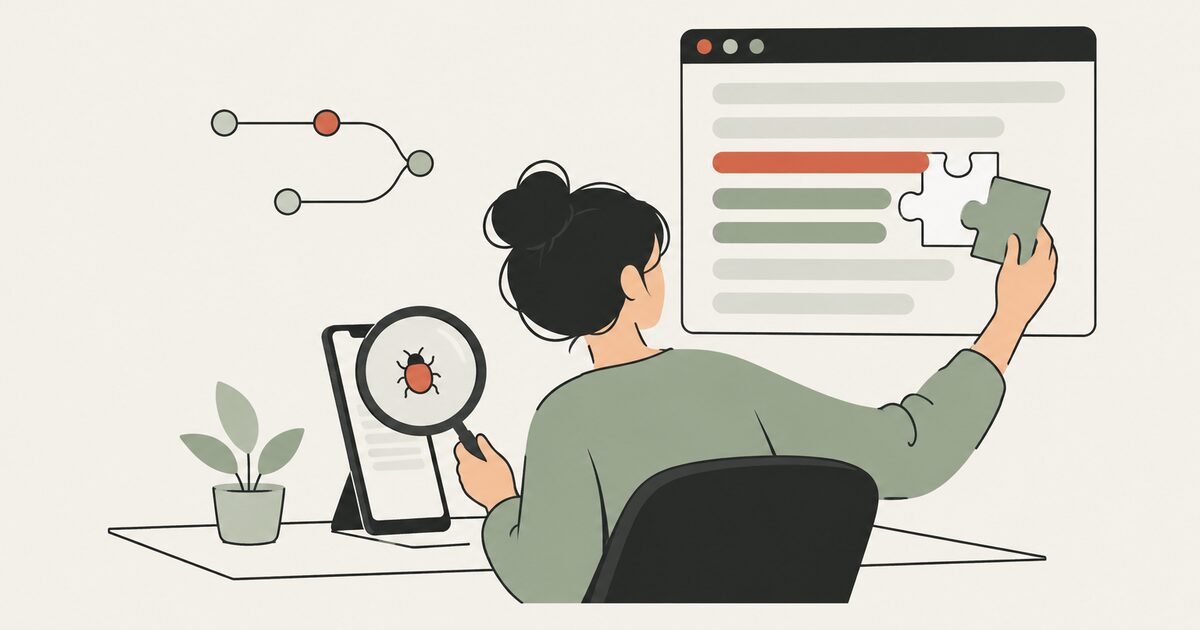
Today: find it, file it, wait
A QA engineer finds a bug. They write a ticket with the steps, screenshots, and expected and actual results. The ticket waits in a backlog. Days later a developer picks it up, switches context, asks a question or two, and sometimes can’t reproduce it. Eventually there is a fix, a new build, and QA tests it again.
For a one-line change, that loop can take a week. Most of the time goes into handing the bug from one person to the next, not into fixing it.
The mission doesn’t change
QA was never about writing tickets. The job is making sure the app works for the people who use it. Tickets were simply the best tool QA had for getting a problem fixed by someone else.
That mission stays. QA engineers will keep testing, exploring and asking “what could go wrong?”. What’s new is that they don’t have to stop at the ticket.
Anyone can make an easy fix now
AI coding agents such as Claude Code and Codex can read a codebase and propose a change in minutes. And many of the bugs QA finds are small: a wrong label, a total that’s off by a few cents, a missing check, a test that broke because a button moved.
The person who just reproduced the bug has the best context for it. With an agent doing the typing, that person can also prepare the fix.
What changes for QA
On top of testing, the QA engineer of the next few years will:
- reproduce a failure and read an AI analysis of what went wrong,
- review the proposed change and judge whether it fixes the problem or only hides it,
- run the tests again on the fixed app,
- open a pull request instead of a ticket.
Developers still review and merge. Code review doesn’t go away; the handoff does. What QA needs to learn is modest: reading a diff, basic Git, and spotting a “fix” that weakens a test instead of fixing the app.
SaySpec’s fix step
SaySpec is built for this workflow. QA records the manual tests they already run, and SaySpec turns them into automated tests. When a run fails:
- Analysis. SaySpec’s AI reads the run’s evidence and tells you whether it’s a bug in the app, a test that needs updating, or a problem with the environment.
- Fix. Your coding agent prepares the change in a disposable workspace. Nothing in your app or tests changes until you approve the exact diff.
- Rerun. You run the test again on the fixed app.
- Pull request. SaySpec commits the change to a new branch and opens a pull request with your own Git login.
Instead of a ticket that starts days of back-and-forth, the developer gets a pull request to review. Bring your own AI: SaySpec works with Claude Code and Codex.